Balance of the human body
The control of body balance is a complex function in which peripheral sensory systems such as the vestibular , visual and proprioceptive systems, as well as structures of the central nervous system (CNS), contribute. Therefore, the normal, symmetrical function of the peripheral vestibular organs, the visual and proprioceptive systems, as well as the normal function of the central nervous structures with the cerebellum as the main processor, is essential for the balance of the human body.

The vestibular system
The vestibular system is responsible for stabilizing the gaze during head movements, maintaining orientation in space, and controlling body posture. The above is achieved by connections between specific nerve areas, creating vestibular reflexes. The connection of the vestibular nuclei with the nuclei of the oculomotor nerves is made through fibers of the ascending medial longitudinal fasciculus, and this connection is responsible for the vestibulo -ocular reflex (VOR). With the VOR, the visual field is maintained stable during changes in the position of the head and body.
The connection of the vestibular nuclei with the motor division of the spinal cord is made by fibers of the descending medial longitudinal fasciculus and the vestibulospinal bundle. This connection achieves reflex control (vestibular reflex) of muscle tone, resulting in appropriate adjustment of the position of the trunk and limbs during movements or changes in body position.
Thus, the CNS, through information from the vestibular, proprioceptive and visual systems, produces a final motor command to muscle groups for the stabilization of gaze, head and body posture as well as the control of static and dynamic balance.
Symptoms of vestibular system disorder
Patients with vestibular disorders complain of dizziness, vertigo, nausea, balance problems, falls, and difficulty concentrating. They may also report blurred vision during activities that require head movements, such as walking, or when looking at signs in department stores or reading signs while driving. The persistence of symptoms is mainly due to a delay in central compensation.
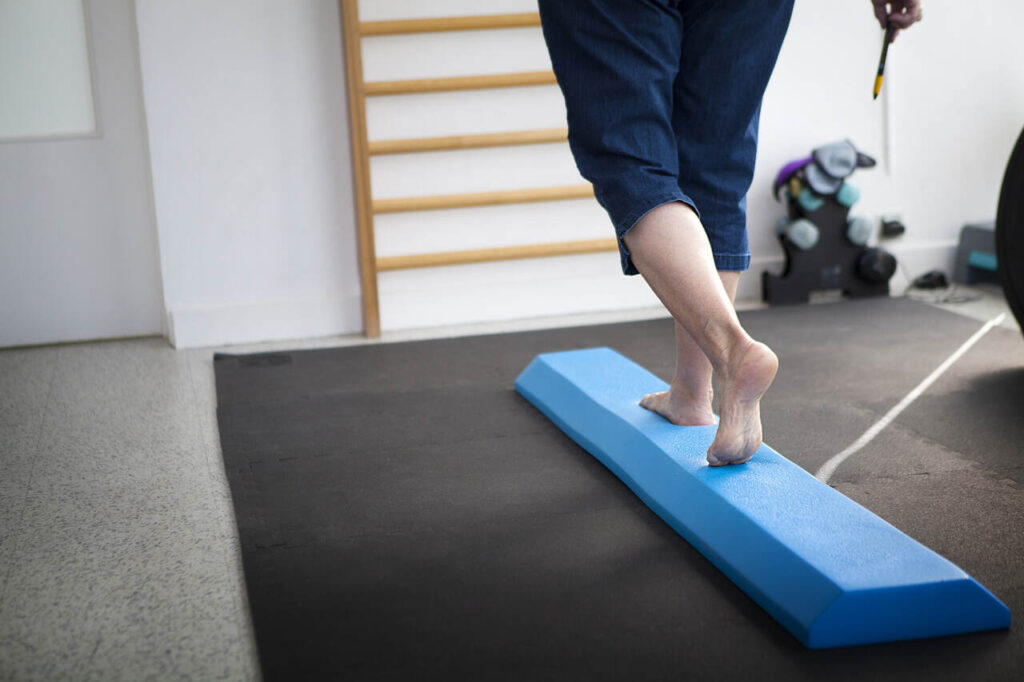
Vestibular rehabilitation exercises
Vestibular rehabilitation exercises have been shown to reduce dizziness, improve static and dynamic balance, thereby reducing the risk of falls, and improve visual acuity during head movement. More specifically, vestibular rehabilitation helps:
- Improving postural stability
- To reduce symptoms of dizziness – vertigo – nausea
- To facilitate the change or modification of vestibular function
- Improving gait stability (including dynamic control in response to sudden – unexpected disturbances)
- Improving movements related to symptoms
- In correcting overdependence (inappropriate sensory selection) on visual or somatosensory stimuli
- In reducing stress and somatizing it
- Facilitating a return to normal daily activities, including usual physical activity, driving and returning to work.
Factors that influence the results of vestibular rehabilitation
Several factors including: age, gender, the time between the onset of symptoms and the start of vestibular rehabilitation, the accompanying health problems and the use of sedative medication, have been evaluated for their effect on the outcome of vestibular rehabilitation.
Age and gender do not negatively affect the improvement of symptoms from vestibular rehabilitation, while it has been found that the long-term use of sedative medication, comorbidity and the time between the onset of symptoms and the start of vestibular rehabilitation play an important role in the outcome of vestibular rehabilitation.
More specifically, early intervention improves the effectiveness of vestibular rehabilitation. For this reason, vestibular rehabilitation should be started as soon as possible from the onset of symptoms. Many studies report that early vestibular rehabilitation intervention after vestibular damage reduces falls, improves the quality of daily activities and the quality of life of patients. Comorbidities such as anxiety-depression, migraines, and peripheral neuropathy appear to negatively affect the results of vestibular rehabilitation. Finally, long-term use of sedatives and hypnotics may negatively affect rehabilitation.
