The Neurac® (Neuromuscular Activation) method is a comprehensive system of evaluation and treatment of the musculoskeletal system, which with the help of Redcord® suspension systems aims to simultaneously strengthen muscles and improve muscle synergy. Redcord® therapy consists of 20% equipment and 80% knowledge. This relationship makes this method capable of providing much more than a series of exercises on a suspension unit and to offer immediate, permanent and very often impressive results in musculoskeletal dysfunctions, especially in dysfunctions of the Spine and Shoulder Girdle disorders.
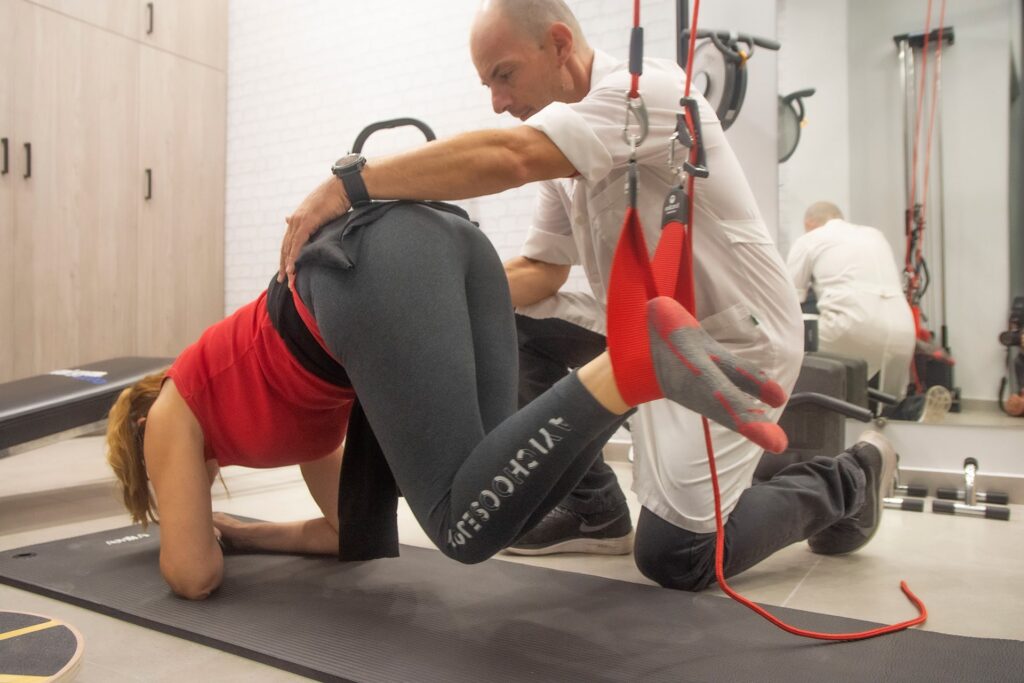
It is a therapy based on functional exercise, using body weight and the assistance of suspension systems. It is based on a unique combination of scientific-research knowledge, the patented suspension equipment of the Norwegian Redcord and specialized clinical treatment by certified therapists.
Studies on the neurophysiology of pain and the motor system have shown that pain can lead to the deactivation of one or more muscles, to the change of the motor “programs” of the brain and to the disturbance of the quality of movement, resulting in a decrease in strength and muscle control and the subsequent increase in dysfunction and/or pain. Even when the initial cause of the pain has ceased to exist, the disturbance remains, leading to the chronicity of the condition. A typical example is the deactivation of the deep stabilizing muscles of the Lumbar and Cervical Spine and the compensatory overactivation of the superficial muscles, conditions that physiotherapists encounter daily in patients with back, neck or shoulder pain.

The innovation of the Neurac© treatment method is that it retrains the Neuromuscular System. That is, it trains the muscles to work in groups by treating them as means of executing a motor program located in the brain, and for the execution of which not only muscle strength is required but also synchronization with the synergists or antagonists of the movement. For example, during walking, the cooperation of stabilizing muscles of the trunk is required. If this is not done correctly and some muscles do not work normally, then after a certain period of walking, pain occurs due to the attempt of some other muscles to compensate for this dysfunction-imbalance.
The first stage is the assessment-identification of the ‘Weak Muscle Links’ of the motor chains and includes the identification of inactive muscles and/or weakness in the stabilizing muscles of the trunk or finally the disturbed interaction between the muscles.
Using the special exercises of the Neurac© treatment method, we aim to improve the interaction between the brain, motor receptors and muscles with subsequent retraining, reactivation and ultimately the restoration of the normal function of the deactivated muscles and restoration of functionality.
Neurac© treatment method can demonstrate impressive results in many clinical cases – from patients suffering from either chronic or acute pain, to high-level athletes. Very often even with the first treatment we achieve a reduction or even disappearance of symptoms along with normalization of functionality.

What is the difference between Neurac Therapeutic Exercise and other strengthening exercises?
Classical strengthening exercise aims to train a specific muscle or group of muscles by isolating it from the antagonistic, synergistic stabilizing muscles. In contrast, Neurac therapeutic exercise through the RedCord system aims at neuromuscular coordination of the muscles, at the retraining of movement and at the proper functioning of stabilizing and synergistic muscles. Also, with this method we can train small muscles of the Spine which cannot be easily trained with other exercise methods.
What conditions can the Neurac method be applied to?
- Back pain
- Sciatica
- Cervical syndrome
- Headaches/Migraines
- Whiplash
- Shoulder pain (supraspinatus tendonitis, impingement syndrome, frozen shoulder, etc.)
- Elbow epicondylitis
- Hip problems
- Knee problems
- Gait and balance problems
